Articles
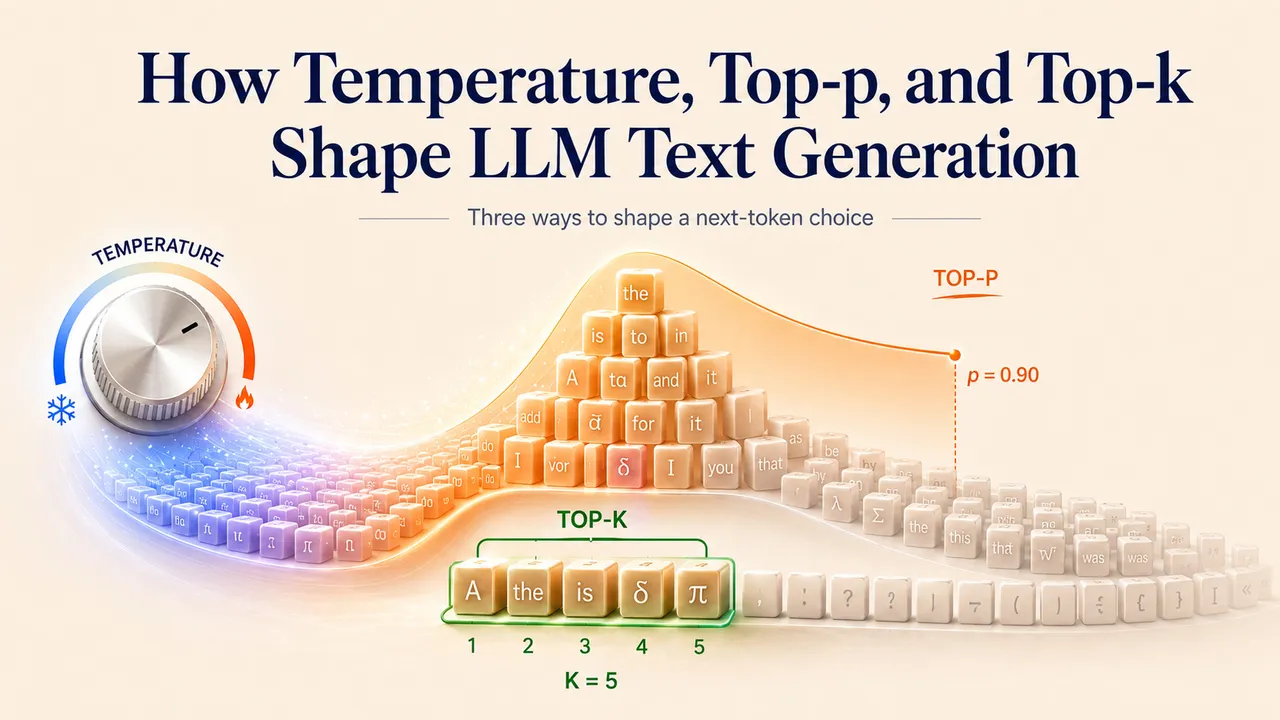 How Temperature, Top-p, and Top-k Shape LLM Text Generation See how temperature reshapes token probabilities while top-p and top-k narrow the candidates an LLM can choose from. August 12, 2026
 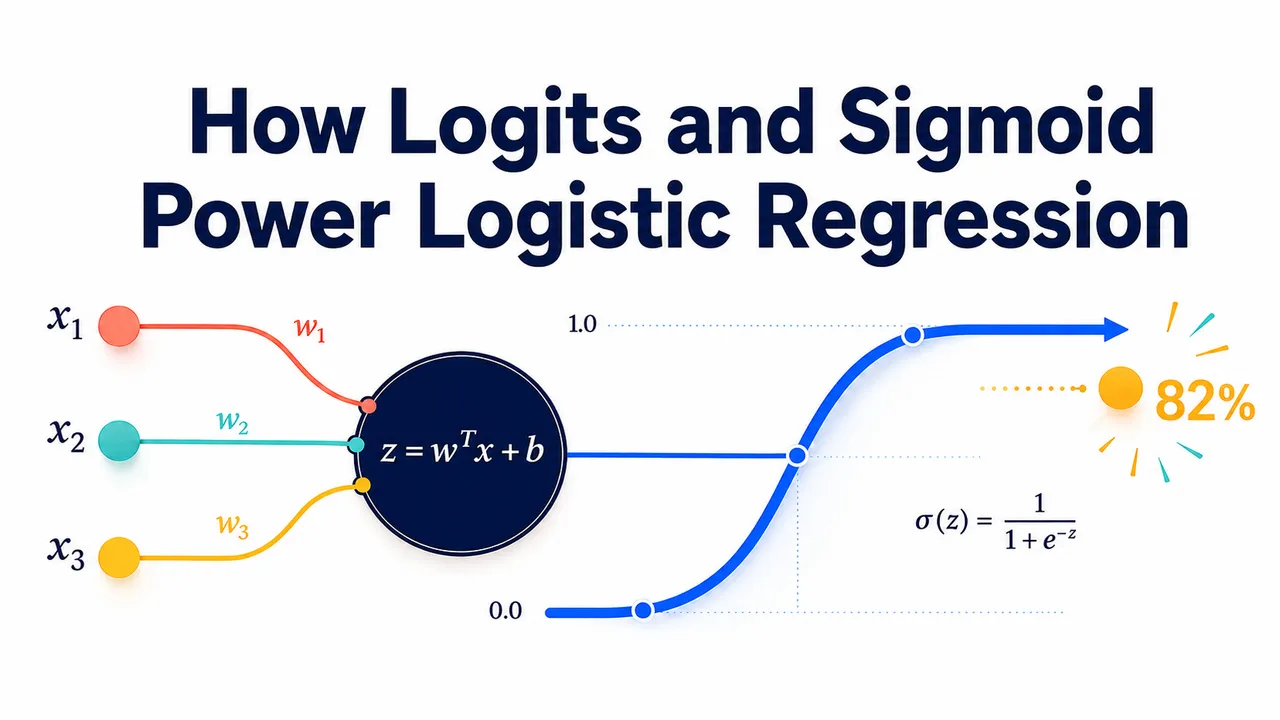 How Logits and Sigmoid Power Logistic Regression Understand how probability becomes odds, odds become logits, and the sigmoid transforms a linear score back into probability. July 23, 2026
 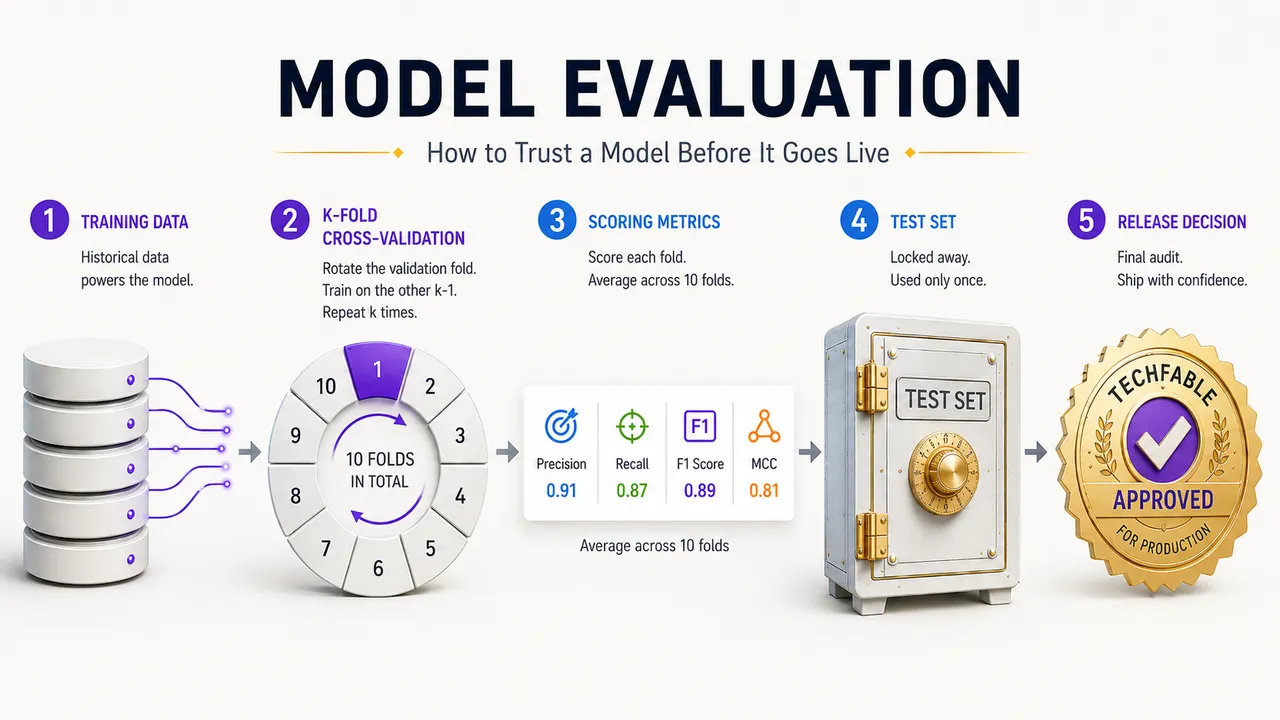 Model Evaluation: How to Trust a Model Before It Goes Live Learn how validation, cross-validation, and a locked test set help choose a model without fooling yourself. July 8, 2026
 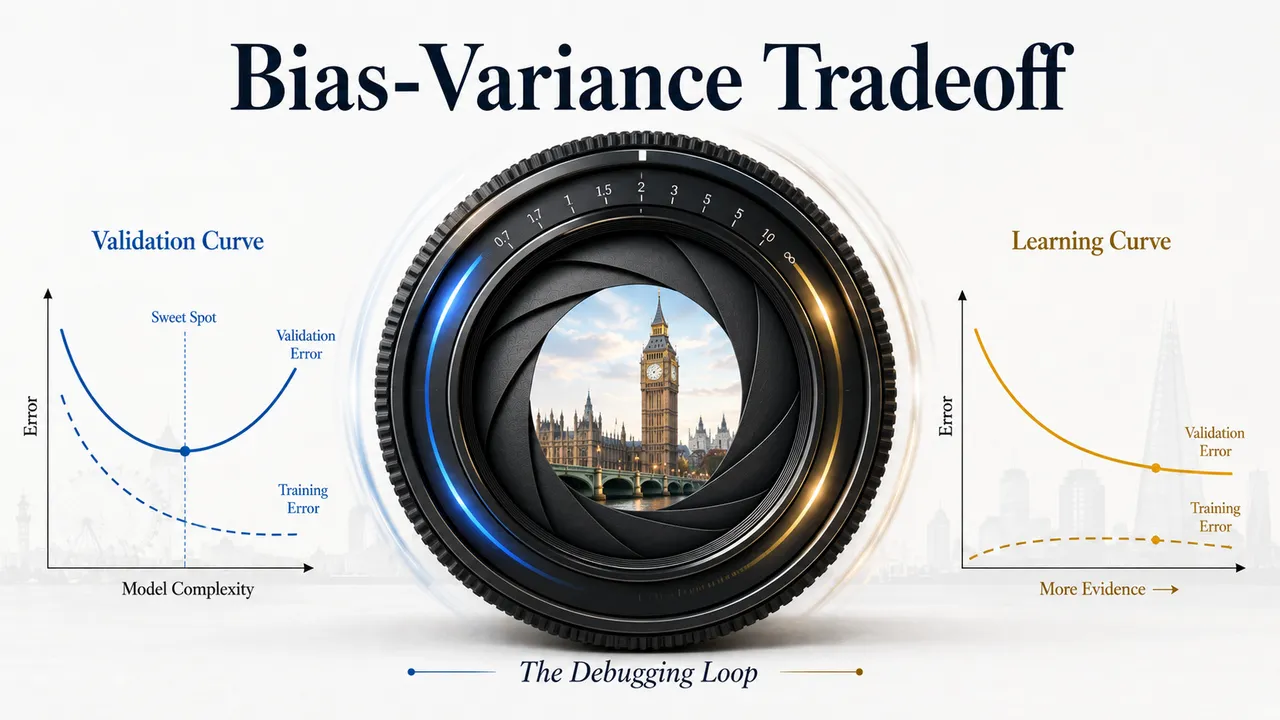 Bias-Variance Tradeoff: The Debugging Loop with Validation and Learning Curves A story-driven guide to the bias-variance tradeoff, showing how validation curves and learning curves diagnose underfitting, overfitting, and when more training data actually helps. June 14, 2026
 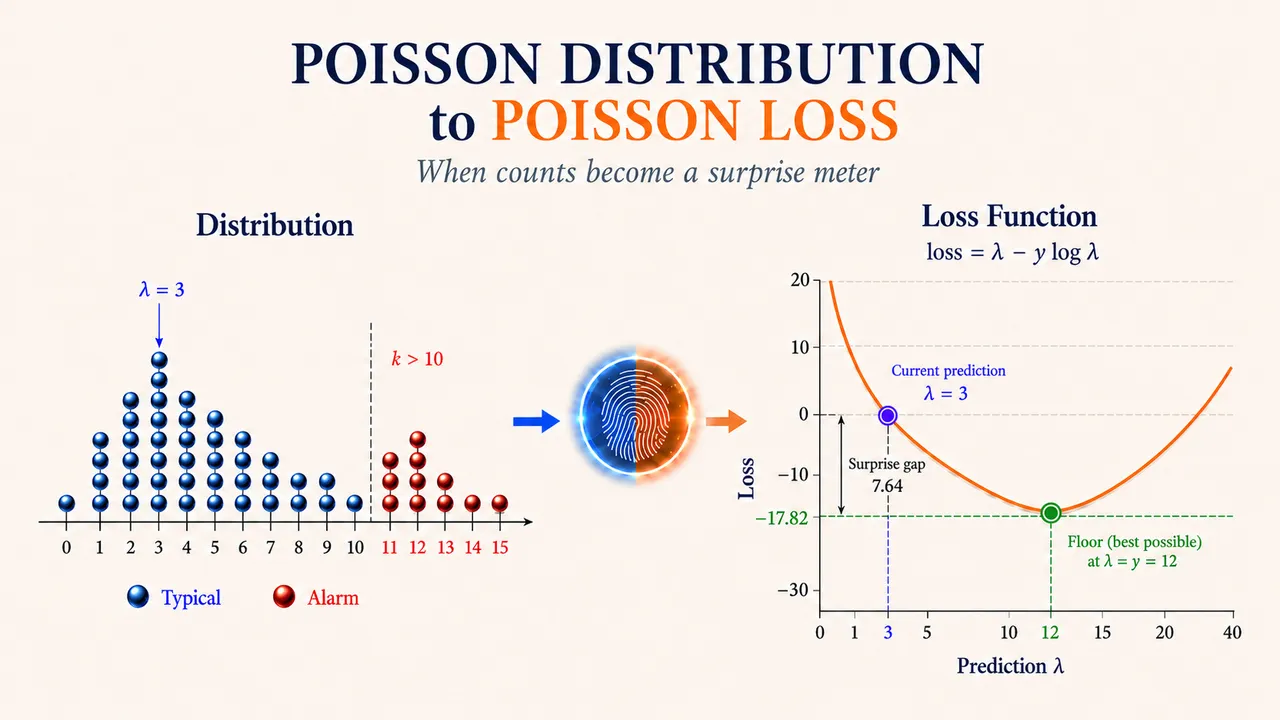 Poisson Distribution to Poisson Loss Learn why Poisson loss is the surprise meter for counts, rates, and fixed windows—from failed logins to any event that arrives one tally at a time. June 12, 2026
 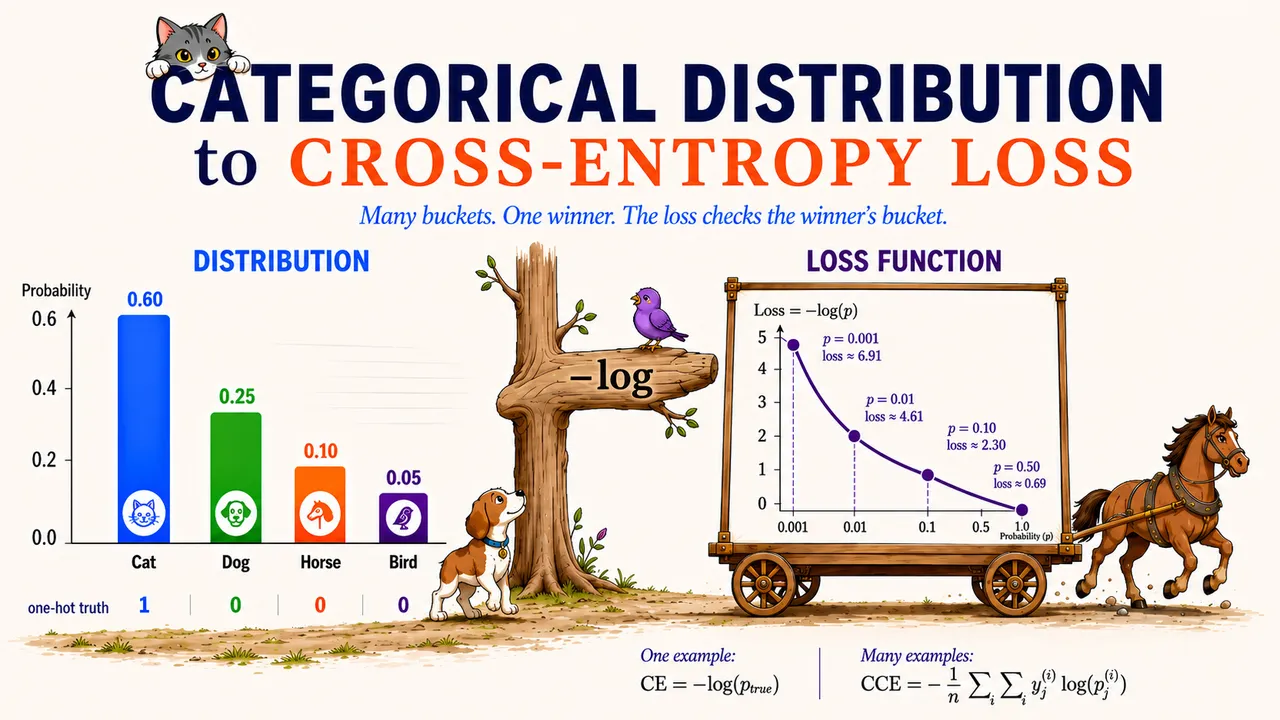 Categorical Distribution to Categorical Cross-Entropy Loss Many labels. One winner. Learn why categorical cross-entropy is the natural loss for many-choice classification and how the correct bucket decides the penalty. June 11, 2026
 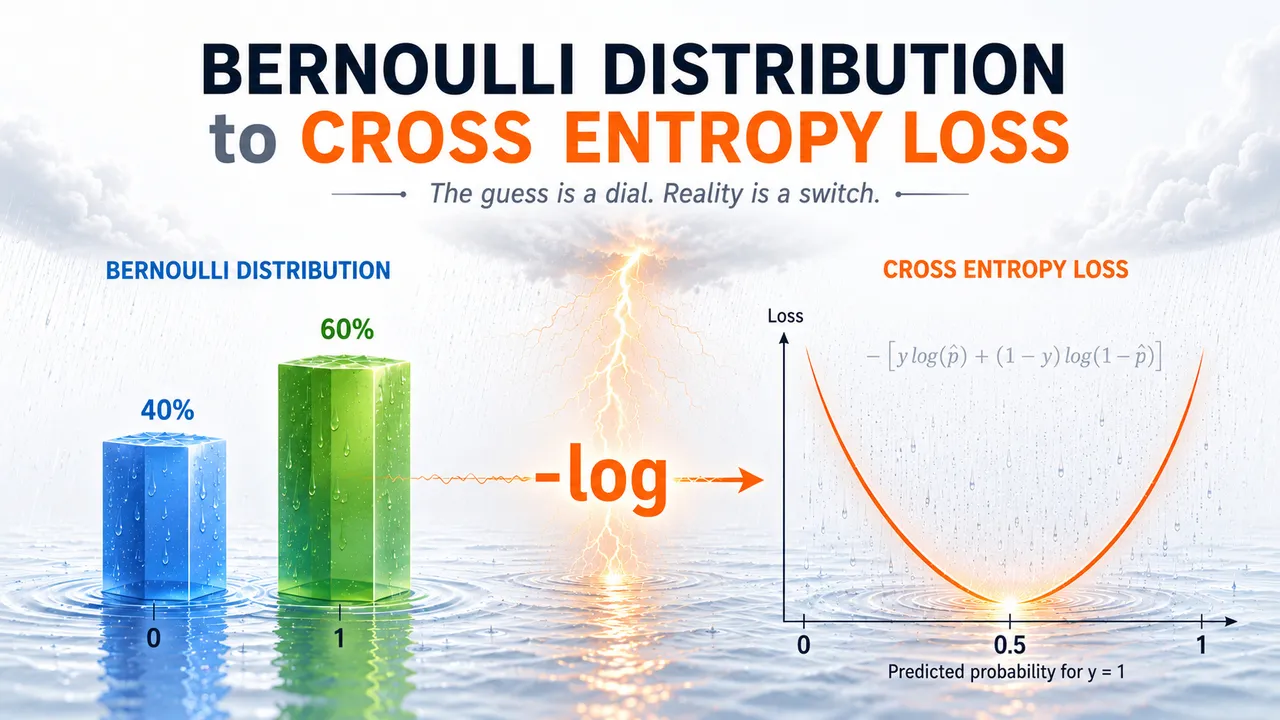 Bernoulli Distribution to Binary Cross-Entropy Loss Why Bernoulli yes/no outcomes lead to binary cross-entropy loss, using rain probabilities to explain two buckets, confident wrong guesses, and negative log penalties. June 10, 2026
 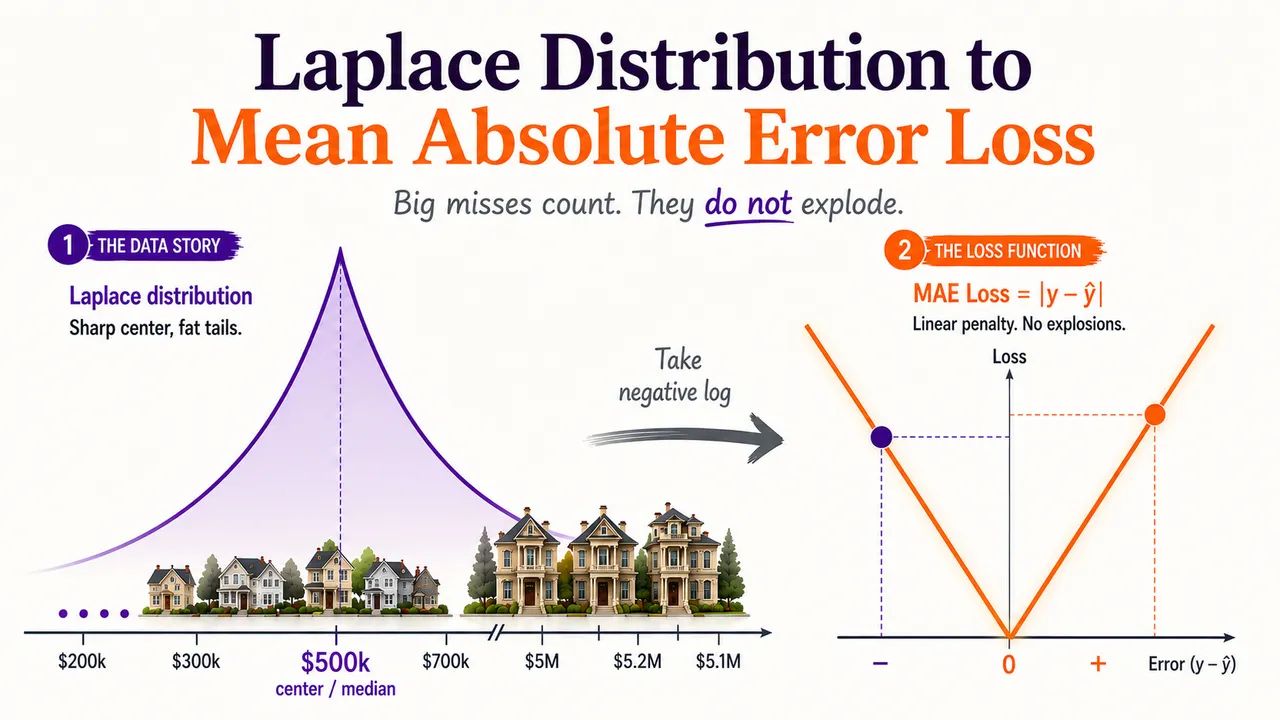 Laplace Distribution to Mean Absolute Error Loss Why Laplace distribution errors lead to mean absolute error loss, using mansion-priced outliers to explain MAE, fat tails, and calmer penalties. June 9, 2026
 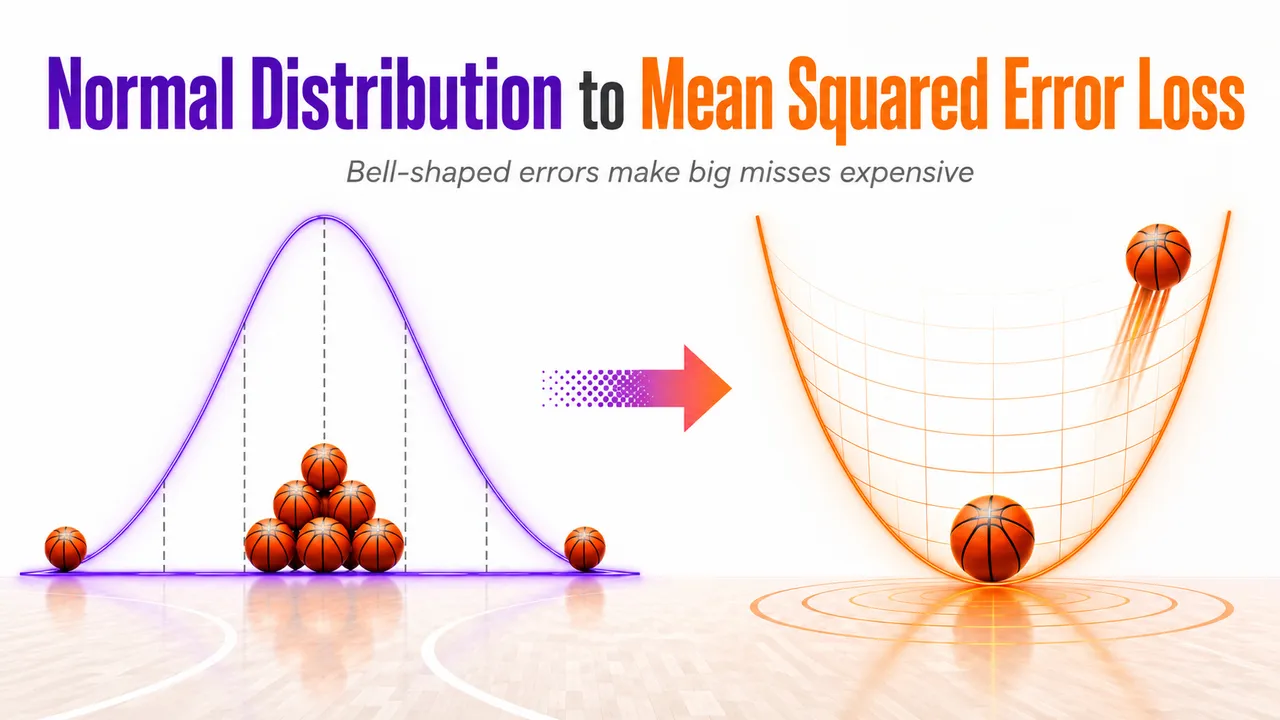 Normal Distribution to Mean Squared Error Loss Learn why Normal distribution errors lead to mean squared error loss, using a basketball story to explain MSE, squared errors, and big-miss penalties. July 7, 2026
 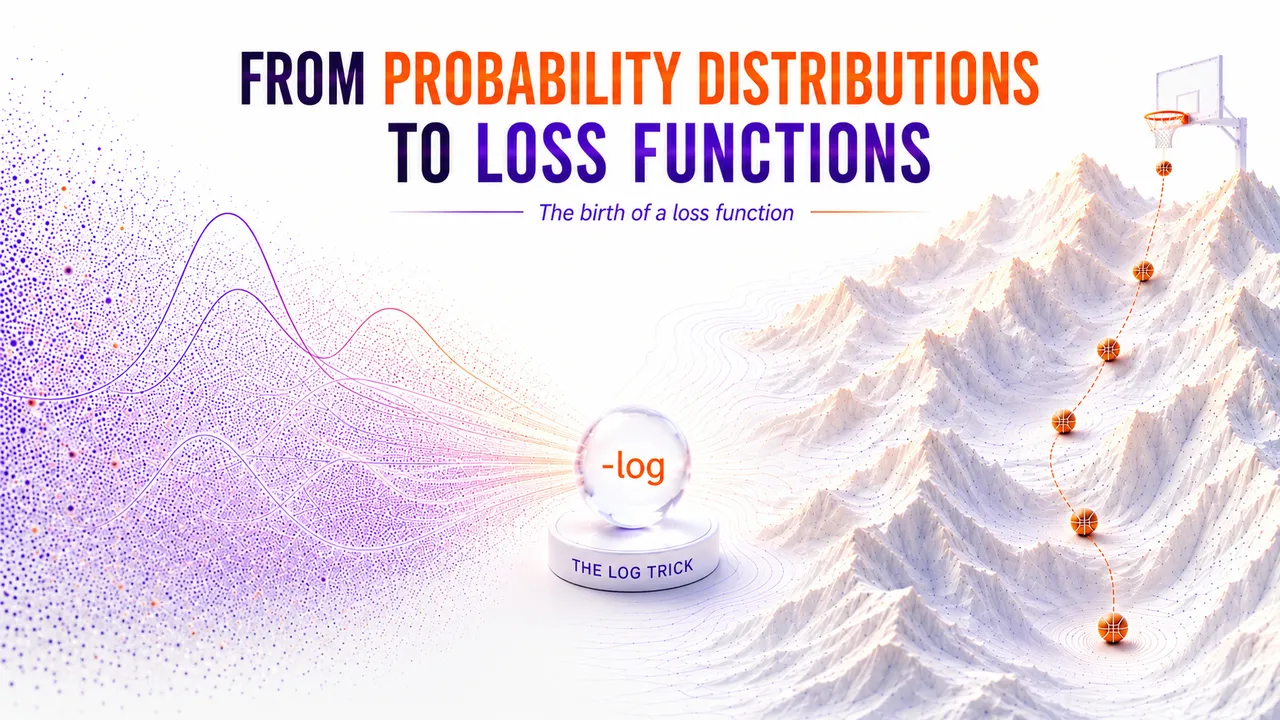 From Probability Distributions to Loss Functions Learn how maximum likelihood connects distributions to loss functions, why raw likelihood underflows, and how negative log-likelihood makes training possible. June 5, 2026
 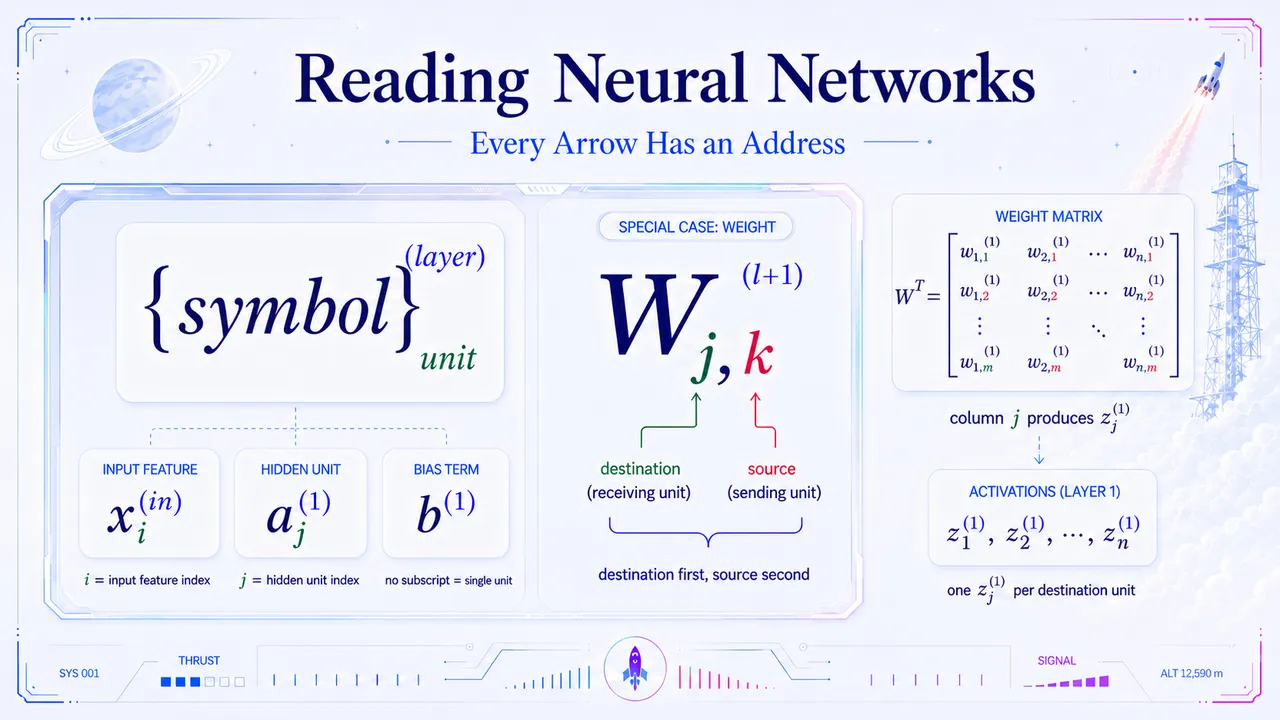 Reading Neural Networks - Every Arrow Has an Address Learn how to read a fully connected neural network diagram — from layers and activations to weight matrices, subscripts, and arrow labels. June 4, 2026
 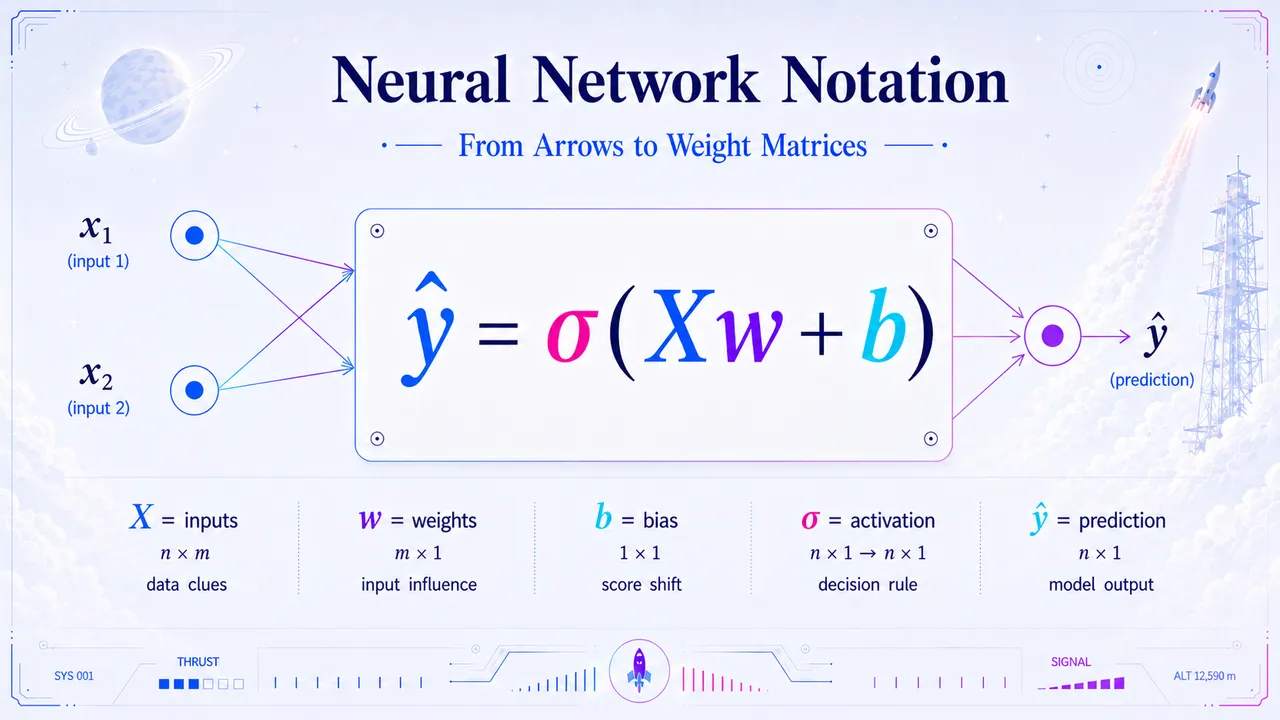 Neural Network Notation - From Arrows to Weight Matrices Decode neural network notation through a rocket launch story. Learn layers, weight subscripts, Wᵀ, hidden-layer scores, and how vectorization scores a whole dataset at once. June 3, 2026
 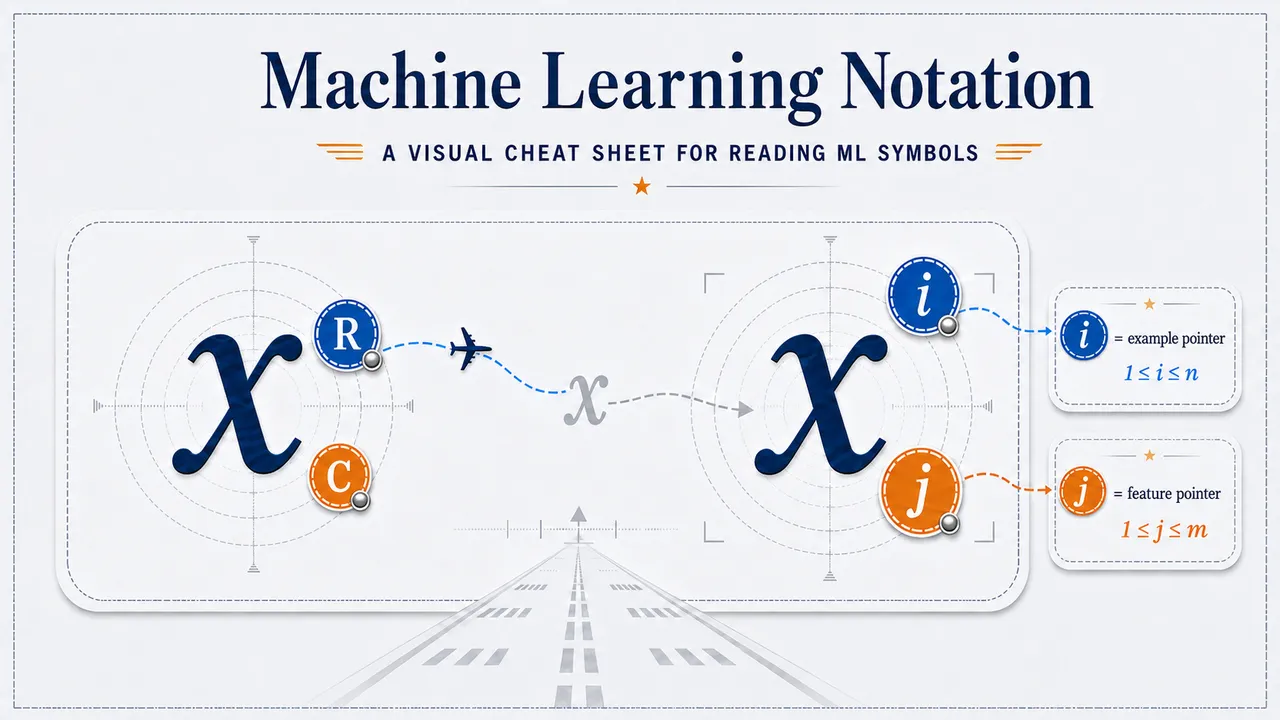 Machine Learning Notation - From Flight Logs to Symbols Decode the secret language of machine learning notation through an RC flight log story — from rows and features to inputs, labels, indexed values, and predictions. June 3, 2026
 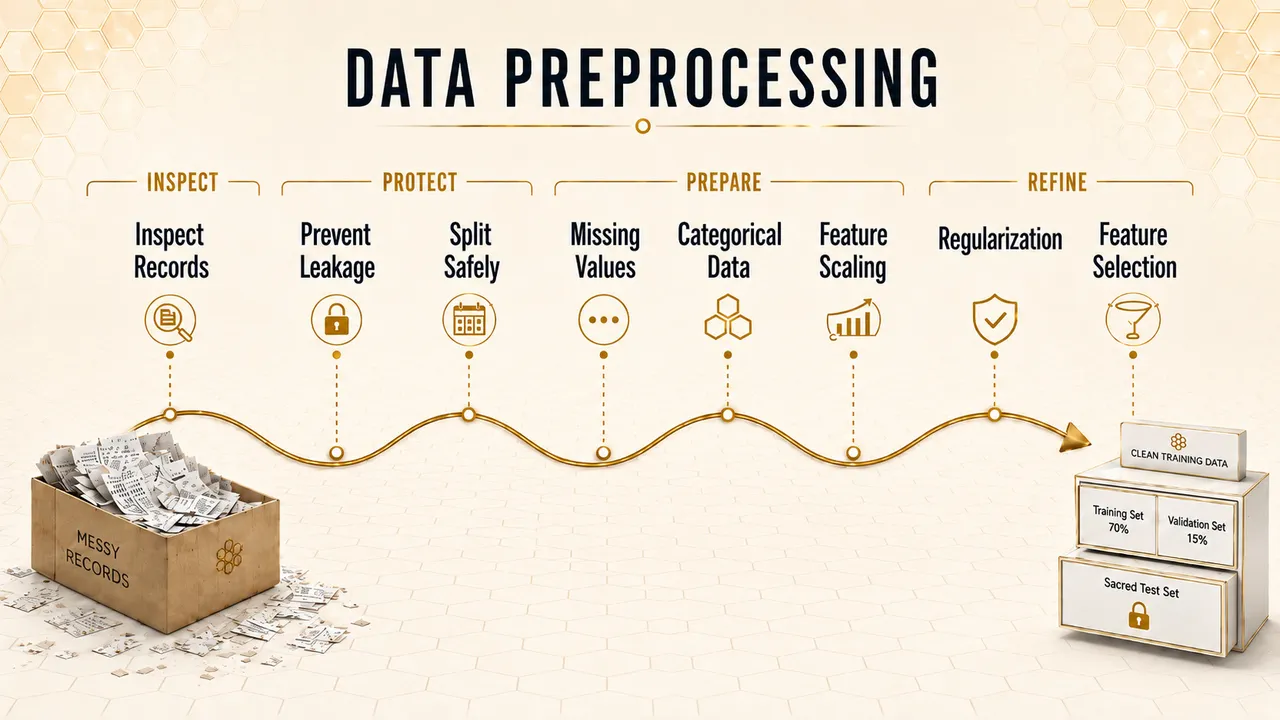 Data Preprocessing for Machine Learning: Transforming Messy Logs into Clean Training Data The quest to predict hive health begins with a messy shoebox of hive logs. Follow HiveDoctor as raw records become clean training data for spotting hives in trouble. May 28, 2026
  Regularization: Stop Your Model From Chasing Every Buzz YieldMaster looks perfect on spring records, but perfect training charts can hide overfitting. Learn how regularization adds restraint: L1 cuts, L2 calms. May 23, 2026
  Agentic Architecture: A Goal-Driven System Understand AI agent architecture with a robot beekeeper story covering agentic loops, tool calls, memory, guardrails, multi-agent systems, and observability. May 17, 2026
 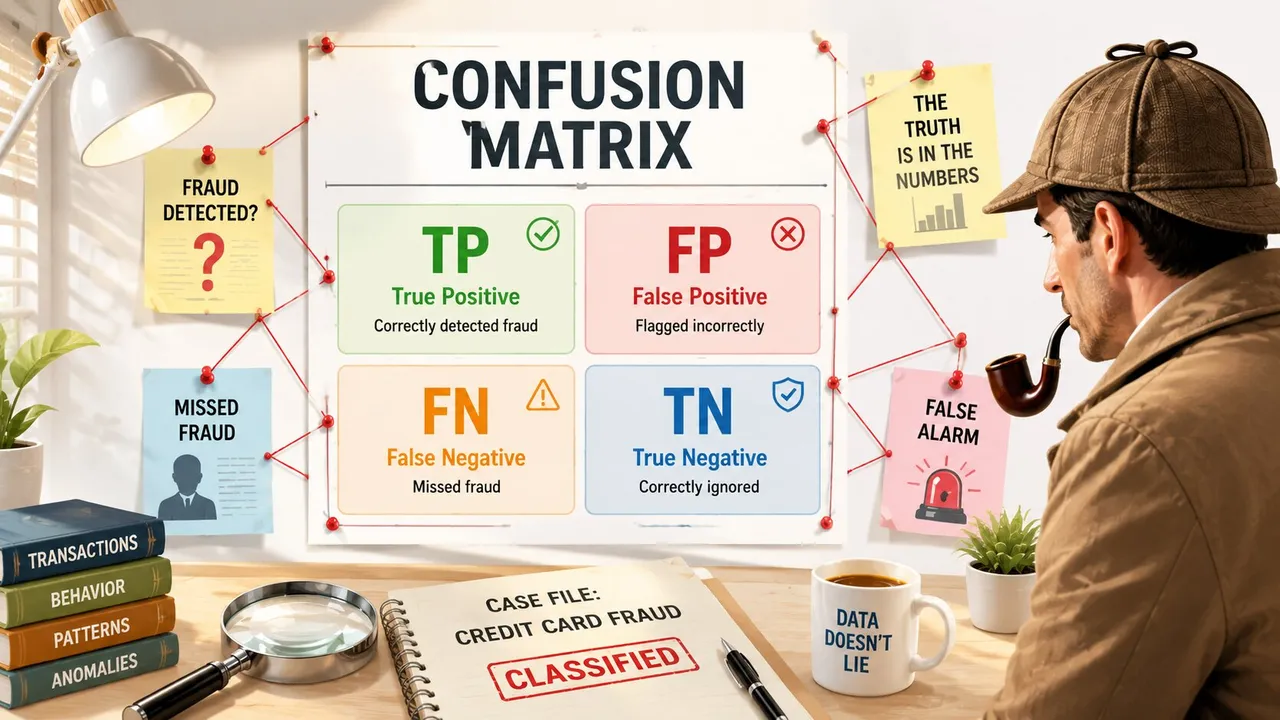 Confusion Matrix, Precision, Recall and F1 - Sherlock’s Fraud Case Sherlock Holmes investigates fraud while uncovering accuracy, precision, recall, and F1 score through the confusion matrix. May 7, 2026
  LLM City and Tokens Explore LLM City, where words become currency — a fable that makes tokens click. May 9, 2026